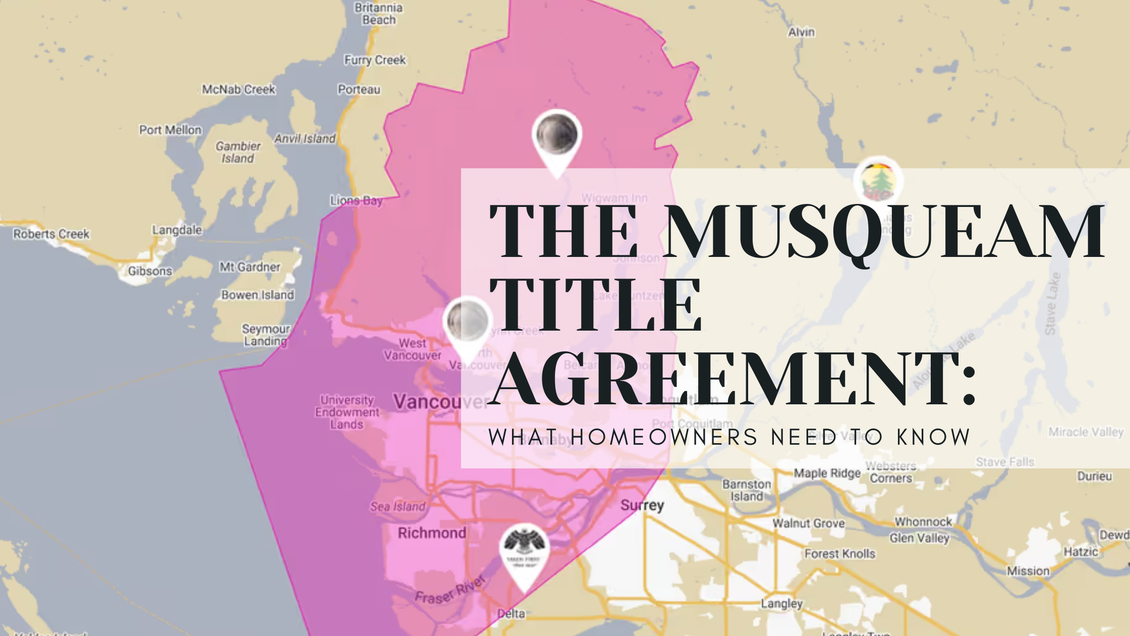
If you live in Vancouver, Richmond, Burnaby, or on the North Shore, you may have seen the headlines this week about a landmark agreement between the federal government and the Musqueam First Nation. It recognizes Aboriginal title over a vast area covering much of Greater Vancouver .
As a realtor, my phone has been ringing. Clients are asking the same question: "What does this mean for my property?"
It's a fair question, especially after last summer's B.C. Supreme Court ruling in the Cowichan case, which created confusion and concern among homeowners in Richmond . Let's cut through the noise and look at what these new agreements actually say, what they don't say, and what questions remain unanswered for property owners.
The Agreements: What Was Signed?
Last month, the Musqueam Indian Band and the federal government signed three separate deals :
A Rights Recognition Agreement: This 30-page document "provides general recognition that Musqueam has Aboriginal rights and title within their Territory" .
A Marine Management Agreement: Focused on shared decision-making for protecting waters and resources with the Canadian Coast Guard .
A Fisheries Agreement: Grants the First Nation a greater role in fisheries management and provides funding for vessels and gear .
The territory in question is significant. While the new agreement doesn't include a map, it references a 1976 Musqueam declaration that spans Vancouver, Richmond, Burnaby, parts of Delta, North Vancouver, and West Vancouver .
The Official Stance: "Private Land is Not Affected"
This is the message both the government and the Musqueam are emphasizing. The federal government has stated unequivocally that the agreements "do not have any effect on privately owned land". The agreement itself says it does not "create, amend, establish, abrogate or derogate" from Musqueam title .
Musqueam Chief Wayne Sparrow has been equally direct, stating: "Musqueam is not coming for anyone's private property. Our approach to traditional unceded territory is one of partnership and relationship with our neighbours, not trying to take away our neighbour's private property".
On the surface, this sounds reassuring. So why is there still unease?
A Realtor's Skeptical Perspective: The Unanswered Questions
For anyone whose home is their largest financial asset, "trust us" isn't a legal safeguard. Here’s why this agreement warrants close attention, not panic, but attention.
1. It's a "Framework for Future Negotiations"
The government's own press release states the agreement "establishes a framework for ongoing discussions and future negotiations to define how and where those rights and title could apply" . This isn't the final chapter; it's the table of contents. The agreement explicitly aims for "incremental implementation" of Musqueam rights . The question for property owners is: incremental implementation where, and how, if not on private land?
2. The Cowichan Precedent Looms Large
This agreement was signed just months after a B.C. Supreme Court ruling confirmed that the Cowichan Tribes hold Aboriginal title over land in Richmond that includes privately owned properties . While that decision is under appeal and the Cowichan have also stated they aren't coming for private homes, the legal reality is that the court found Aboriginal title can co-exist with, and some argue, sit above, fee simple title . Law Professor Dwight Newman noted that the Musqueam agreements are of "elevated interest right now because of the Cowichan decision" .
3. The Map We Haven't Seen
The agreement recognizes Aboriginal rights and title within Musqueam territory but does not provide a map defining where that title could be exercised in the future . The Musqueam are appealing the Cowichan decision, arguing it impacts their own overlapping claims . This suggests the boundaries and application of these rights are very much still in play.
4. The UNDRIP Connection
The agreement explicitly states it intends to contribute to implementing the UN Declaration on the Rights of Indigenous Peoples (UNDRIP) . UNDRIP includes principles like free, prior, and informed consent regarding development on traditional lands. While this agreement doesn't change ownership, it sets a powerful precedent for how future land use decisions, major projects, and even municipal planning could be influenced.
What This Means for Homeowners and Buyers
For now, your private property title remains your private property title. There is no clause in this agreement that transfers your land to the First Nation.
However, as a realtor, I believe in looking beyond the press release to the trajectory. This agreement, combined with the Cowichan ruling, signals a fundamental shift in the landscape of land rights in B.C. The key takeaways:
For Sellers: You can sell your home. There is no new legal impediment. However, be prepared for buyers to ask questions. Due diligence may soon include a conversation about the broader context of Indigenous rights in the region.
For Buyers: This should be part of your education. Understand that you are purchasing property in unceded territory, and that treaties and rights are actively being negotiated and defined by the courts.
For Everyone: Stay informed. This agreement is a "framework." The details are yet to be negotiated.
Dwight Newman, a law professor at the University of Saskatchewan, summed it up well when he called it "a deal to make a deal" . That future deal-making is what we all need to watch.
References & Further Reading
For those who want to dig into the details, here are links to the primary sources and key news coverage:
The Agreement & Official Sources
Global News: Read the full Musqueam rights recognition agreement
Musqueam First Nation Statement: (Referenced in news coverage) "Musqueam is not coming for anyone's private property" "Musqueam sign Aboriginal rights deals with federal government"
Government of Canada News Release: (Announced Feb. 20, 2026) Details on the three agreements signed.
Key News Analysis
CTV News: Musqueam title agreements covering much of Greater Vancouver released by feds
Vancouver Sun: Musqueam sign Aboriginal rights deals with federal government
The National Post: What we know about Ottawa's land rights deal with the Musqueam First Nation
Global News: Expert analysis from Thomas Isaac and reaction to the Cowichan case.
Disclaimer: This blog post is for informational purposes only and does not constitute legal advice. For questions about how this may affect your specific property, please consult with a qualified legal professional.
As a realtor, my phone has been ringing. Clients are asking the same question: "What does this mean for my property?"
It's a fair question, especially after last summer's B.C. Supreme Court ruling in the Cowichan case, which created confusion and concern among homeowners in Richmond . Let's cut through the noise and look at what these new agreements actually say, what they don't say, and what questions remain unanswered for property owners.
The Agreements: What Was Signed?
Last month, the Musqueam Indian Band and the federal government signed three separate deals :
A Rights Recognition Agreement: This 30-page document "provides general recognition that Musqueam has Aboriginal rights and title within their Territory" .
A Marine Management Agreement: Focused on shared decision-making for protecting waters and resources with the Canadian Coast Guard .
A Fisheries Agreement: Grants the First Nation a greater role in fisheries management and provides funding for vessels and gear .
The territory in question is significant. While the new agreement doesn't include a map, it references a 1976 Musqueam declaration that spans Vancouver, Richmond, Burnaby, parts of Delta, North Vancouver, and West Vancouver .
The Official Stance: "Private Land is Not Affected"
This is the message both the government and the Musqueam are emphasizing. The federal government has stated unequivocally that the agreements "do not have any effect on privately owned land". The agreement itself says it does not "create, amend, establish, abrogate or derogate" from Musqueam title .
Musqueam Chief Wayne Sparrow has been equally direct, stating: "Musqueam is not coming for anyone's private property. Our approach to traditional unceded territory is one of partnership and relationship with our neighbours, not trying to take away our neighbour's private property".
On the surface, this sounds reassuring. So why is there still unease?
A Realtor's Skeptical Perspective: The Unanswered Questions
For anyone whose home is their largest financial asset, "trust us" isn't a legal safeguard. Here’s why this agreement warrants close attention, not panic, but attention.
1. It's a "Framework for Future Negotiations"
The government's own press release states the agreement "establishes a framework for ongoing discussions and future negotiations to define how and where those rights and title could apply" . This isn't the final chapter; it's the table of contents. The agreement explicitly aims for "incremental implementation" of Musqueam rights . The question for property owners is: incremental implementation where, and how, if not on private land?
2. The Cowichan Precedent Looms Large
This agreement was signed just months after a B.C. Supreme Court ruling confirmed that the Cowichan Tribes hold Aboriginal title over land in Richmond that includes privately owned properties . While that decision is under appeal and the Cowichan have also stated they aren't coming for private homes, the legal reality is that the court found Aboriginal title can co-exist with, and some argue, sit above, fee simple title . Law Professor Dwight Newman noted that the Musqueam agreements are of "elevated interest right now because of the Cowichan decision" .
3. The Map We Haven't Seen
The agreement recognizes Aboriginal rights and title within Musqueam territory but does not provide a map defining where that title could be exercised in the future . The Musqueam are appealing the Cowichan decision, arguing it impacts their own overlapping claims . This suggests the boundaries and application of these rights are very much still in play.
4. The UNDRIP Connection
The agreement explicitly states it intends to contribute to implementing the UN Declaration on the Rights of Indigenous Peoples (UNDRIP) . UNDRIP includes principles like free, prior, and informed consent regarding development on traditional lands. While this agreement doesn't change ownership, it sets a powerful precedent for how future land use decisions, major projects, and even municipal planning could be influenced.
What This Means for Homeowners and Buyers
For now, your private property title remains your private property title. There is no clause in this agreement that transfers your land to the First Nation.
However, as a realtor, I believe in looking beyond the press release to the trajectory. This agreement, combined with the Cowichan ruling, signals a fundamental shift in the landscape of land rights in B.C. The key takeaways:
For Sellers: You can sell your home. There is no new legal impediment. However, be prepared for buyers to ask questions. Due diligence may soon include a conversation about the broader context of Indigenous rights in the region.
For Buyers: This should be part of your education. Understand that you are purchasing property in unceded territory, and that treaties and rights are actively being negotiated and defined by the courts.
For Everyone: Stay informed. This agreement is a "framework." The details are yet to be negotiated.
Dwight Newman, a law professor at the University of Saskatchewan, summed it up well when he called it "a deal to make a deal" . That future deal-making is what we all need to watch.
References & Further Reading
For those who want to dig into the details, here are links to the primary sources and key news coverage:
The Agreement & Official Sources
Global News: Read the full Musqueam rights recognition agreement
Musqueam First Nation Statement: (Referenced in news coverage) "Musqueam is not coming for anyone's private property" "Musqueam sign Aboriginal rights deals with federal government"
Government of Canada News Release: (Announced Feb. 20, 2026) Details on the three agreements signed.
Key News Analysis
CTV News: Musqueam title agreements covering much of Greater Vancouver released by feds
Vancouver Sun: Musqueam sign Aboriginal rights deals with federal government
The National Post: What we know about Ottawa's land rights deal with the Musqueam First Nation
Global News: Expert analysis from Thomas Isaac and reaction to the Cowichan case.
Disclaimer: This blog post is for informational purposes only and does not constitute legal advice. For questions about how this may affect your specific property, please consult with a qualified legal professional.